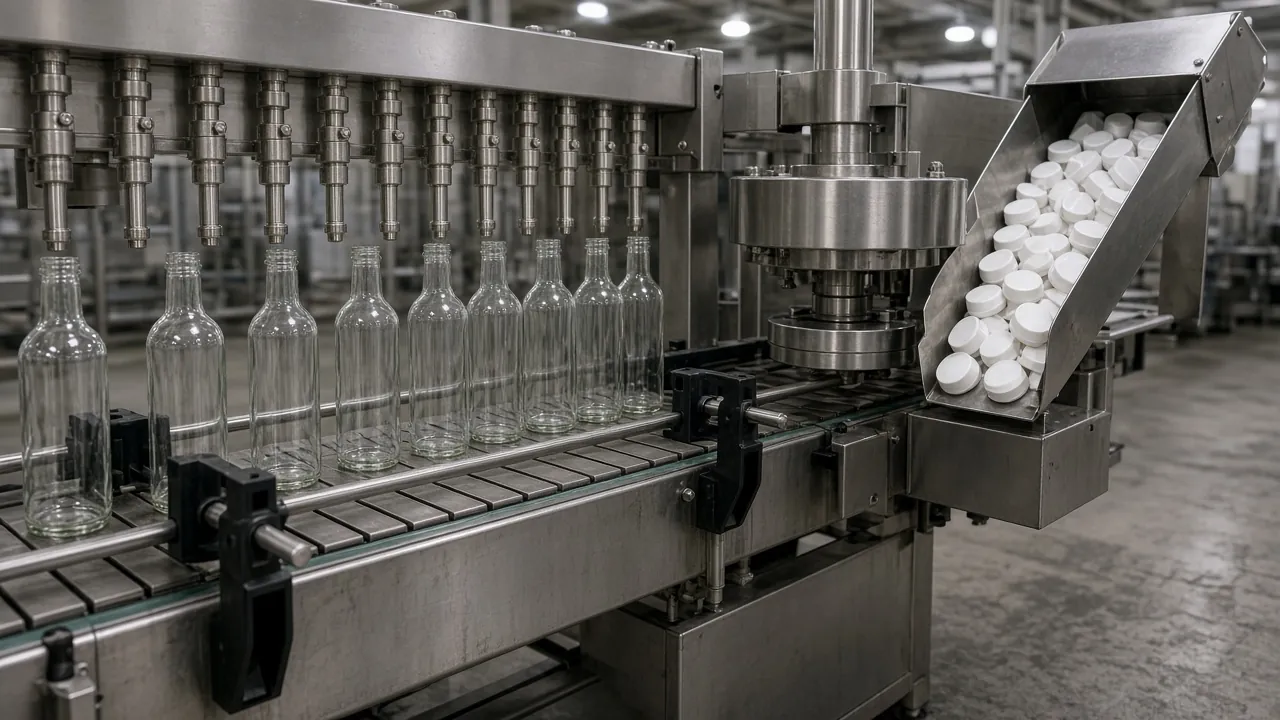
An unnamed handoff on a packaging line fails at installation and causes rework before any counted output exists. Record the entering product, the leaving pack, and the owner of each interface before comparing offers.
A packaging-line specification should describe one agreed production task and assign every required handoff, document and verification item to a named party. Begin with product and pack references, define the counted output, then compare included and excluded scope. This guide provides an input register, machine-to-machine responsibility matrix, scope schedule and assumption log.
| Input or item | Value printed on the saved page | Why it matters |
|---|---|---|
| Entering product, size, weight | Not printed. EDL asks for sizes, configurations, and weights. | Sets the state that arrives |
| Throughput or line speed | Not printed. EDL asks for current and future rates. PMMI says to specify the speed. | A late rate change adds changeovers |
| Counted output unit | Not printed. Innova asks for pallets per day, week, or month. | A machine cycle is a different count from a pallet |
| Film, when the machine uses film | EDL examples: LDPE; 2.0 mil; clear or opaque; print none, random, or registered; maximum roll diameter 14 in or 20 in | Examples, not the film this project will run |
| Electrical service | EDL: 460/480 VAC, 3-phase, 60 Hz typically preferred | The site value stays empty until a site record prints it |
| Compressed air | EDL: 90 psi typically preferred | Same. Kilowatts are not printed |
| Temperature | Not printed. EDL asks for the range. PMMI refers to packing at a certain temperature. | Leave empty |
| Viscosity or consistency | Not printed. PMMI refers to a certain consistency. | Leave empty |
| Nozzle size | Not printed | Leave empty |
| Power (kW) | Not printed | Leave empty |
| Machine-data interface | OMAC: PackML was adopted by ISA as TR88.00.02. The ISA catalog titles ISA-TR88.00.02-2022 and does not print the state list. Weihenstephan: 440 data points across all domains, and over 150 machine classes. The WS Pack subset count is not printed. | Name only the points this line will exchange |
Where does the line begin and end?
| Boundary | What the buyer writes | What the offer must answer |
|---|---|---|
| Start | Product or pack identity and the arriving state | Receiving scope, or an explicit exclusion |
| Operations in between | Filling, closing, wrapping, grouping, coding, or pallet tasks that this project includes | Machines included, and machines left out |
| Finish | Approved pack or load and the leaving state | Delivery point and who receives it |
| Equipment kept on site | The actual machine and the interface records that exist | Who reviews the joint connection |
| Outside this project | Tasks owned upstream or downstream | Named exclusions |
If the leaving unit is a pallet headed to storage, say so, and use the material-handling section to keep that receiving step out of the packaging scope until someone owns it. If the end-of-line machine is a shrink tunnel, the heat-shrink buying guide separates sealer, tunnel, and conveyor instead of folding them into one line label. When upstream converting supplies multi-layer barrier reels to form-fill-seal equipment, define the 5-roll solventless or thermal web specification and curing hold in the roll-to-roll laminator machine selection guide.
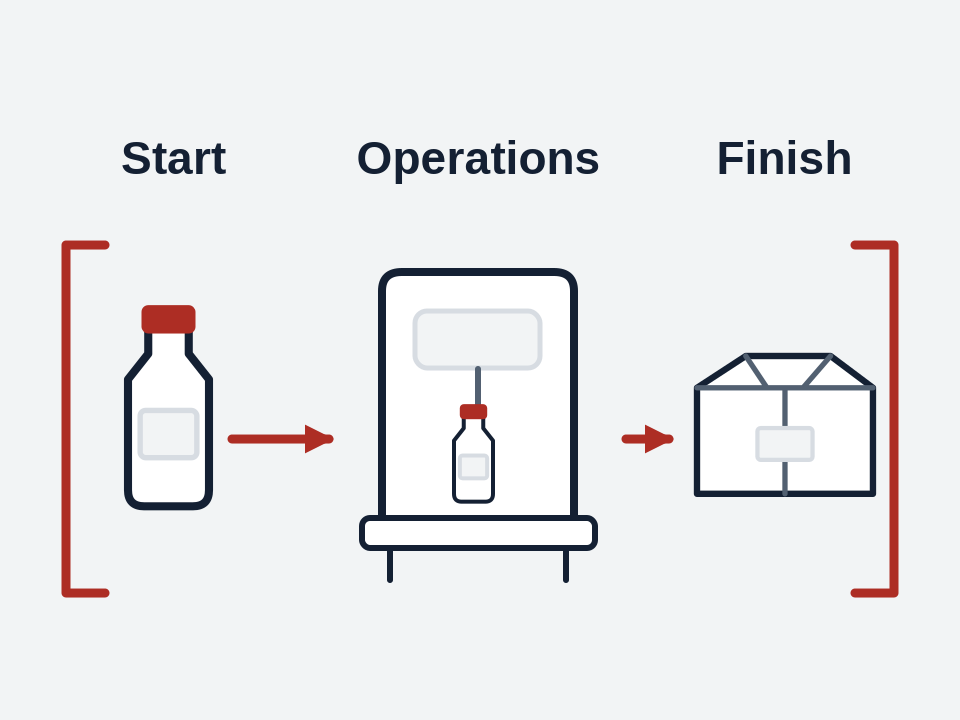
The diagram is a scope sketch: start, operations, finish. It is not a layout and it does not set a speed.
Takeaway: Specify the task and the two boundaries. The machine count does not do that work.
Which inputs make two offers comparable?
Give every supplier the same requirement rows, and keep their exceptions in writing. EDL lists eight areas for an end-of-line machine: the current process and what has already been tried; product sizes, pack configurations, throughput rates, and weights, including future ones; the job the finished package must do; film; utilities; preferred components and part numbers; the production environment; and footprint, with infeed and exit elevations.
The printed examples stop at a short list. For film, EDL gives LDPE, a gauge of 2.0 mil, clear or opaque film, printing of none, random, or registered, and a maximum preferred roll diameter of 14 in or 20 in. For utilities, EDL says a 460/480 VAC, 3-phase, 60 Hz supply and 90 psi air are typically preferred. The page asks for temperature range, humidity range, dust, washdown, an IP rating, and cleaning agents, and it prints none of those numbers. It does not print kilowatts.
PMMI’s factory-acceptance roadmap of 10 June 2021, as saved from the 12 December 2024 archive, says to specify how many packages will be produced and at what speed. It does not print a package count or a speed. It also says a product packed at a certain temperature, or with a certain consistency or rate of speed, is hard to reproduce in the builder’s plant. It does not print the temperature, the consistency, or the speed.
For a liquid, record product condition on the filling-machine product-condition page. This specification does not supply a viscosity. Leave that cell empty until the product record prints one.
Keep the current schedule and any future pack or rate on separate rows. EDL says extra products and higher throughput added at the last minute cause delays and changeovers, and they add cost. This page prints no prices.
Rule of thumb: If available compressed air is below 90 psi, write a utility exception before you treat bids as comparable. EDL’s published preference, dated 14 April 2015, is 90 psi. The page does not print a nozzle size or a compressor kilowatt rating, so those cells stay empty.
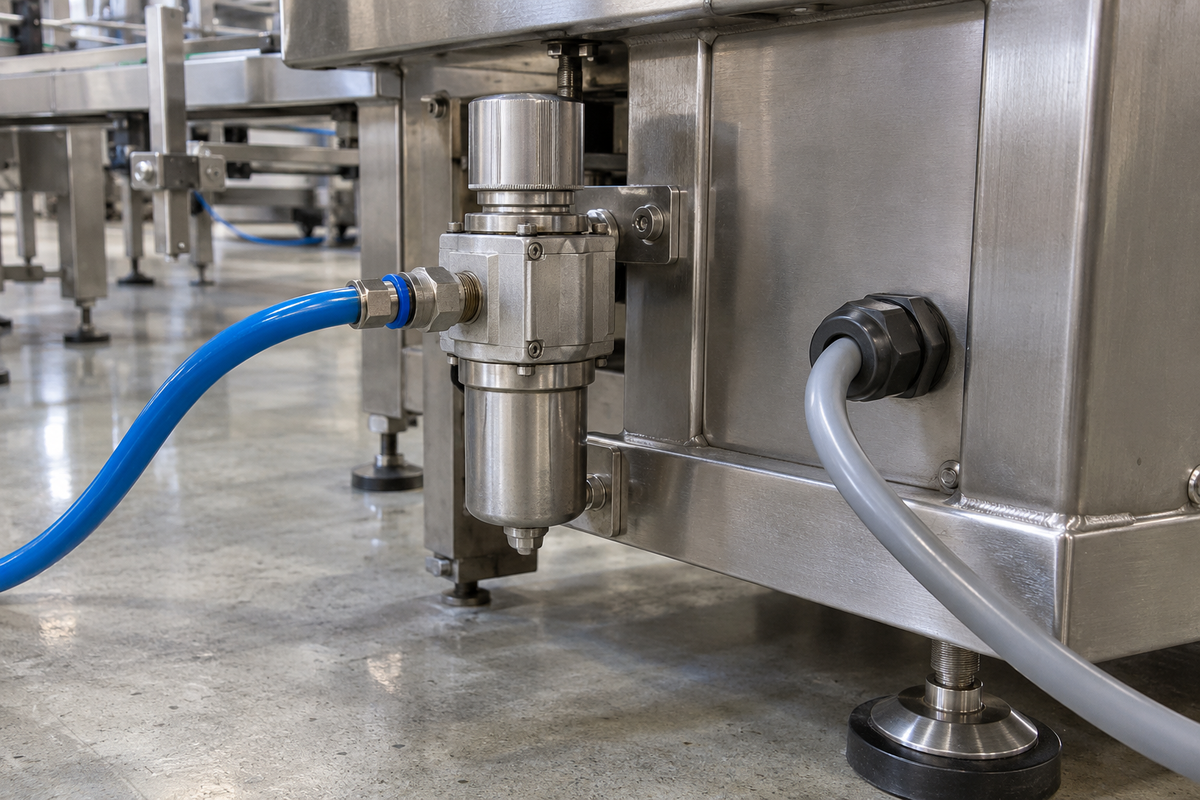
The photograph shows where air and electrical service enter a machine. It does not show a pressure, a voltage, or a kilowatt load.
| Field | Printed reference | Project cell |
|---|---|---|
| Air | 90 psi, typically preferred (EDL) | Not printed. Leave empty until the site record prints it |
| Electrical | 460/480 VAC, 3-phase, 60 Hz, typically preferred (EDL) | Not printed |
| Film gauge example | 2.0 mil (EDL example) | The project’s gauge, when the film spec prints it |
| Roll diameter examples | 14 in or 20 in (EDL examples, not a pair from one roll) | The project’s maximum diameter |
| Line speed | Not printed | Empty |
| Temperature | Not printed | Empty |
| Viscosity | Not printed | Empty |
| Nozzle size | Not printed | Empty |
| Power (kW) | Not printed | Empty |
Who owns each machine-to-machine handoff?
Give every boundary a row for what crosses it, how it should behave when the next machine is not ready, and who confirms the joint answer. Mechanical transfer and the control response are two rows, even when one company supplies both machines.
OMAC describes PackML as the automation standard for transferring and retrieving consistent machine data, developed by OMAC and adopted by ISA as TR88.00.02. The public page says a PackML machine should show a common look and feel and consistent defined behavior across manufacturers and control systems. The ISA product page titles the report ISA-TR88.00.02-2022, Machine and Unit States: An implementation example of ISA-88.00.01. That page is a catalog entry. It does not print the state list, the tag names, or any speed. Leave those fields empty. Do not treat the catalog title as the text of the report.
Weihenstephan Standards define a communication interface for machine data to higher-level IT systems and from machine to machine, using WS OPC UA or the WS Protocol. The standard contains 440 data points across all WS domains and defines over 150 machine classes, with domain profiles that mark which points are required and which are optional. A line specification lists the exact data points the project will exchange.
| Boundary/reference | Mechanical requirement/document and supply owner | Control-response requirement/document and confirmation owner | Joint verification reference and owner |
|---|---|---|---|
| Buyer to complete | Actual transfer/elevation/layout scope | Actual function/interruption/recovery scope under review | Shared record, responsible party and status |
Use real machine names and boundary references in the project copy of this table; A and B here are placeholders for an identified proposal. Do not replace written scope with the phrase fully integrated. If more than one party supplies a connection, name who resolves the joint answer.
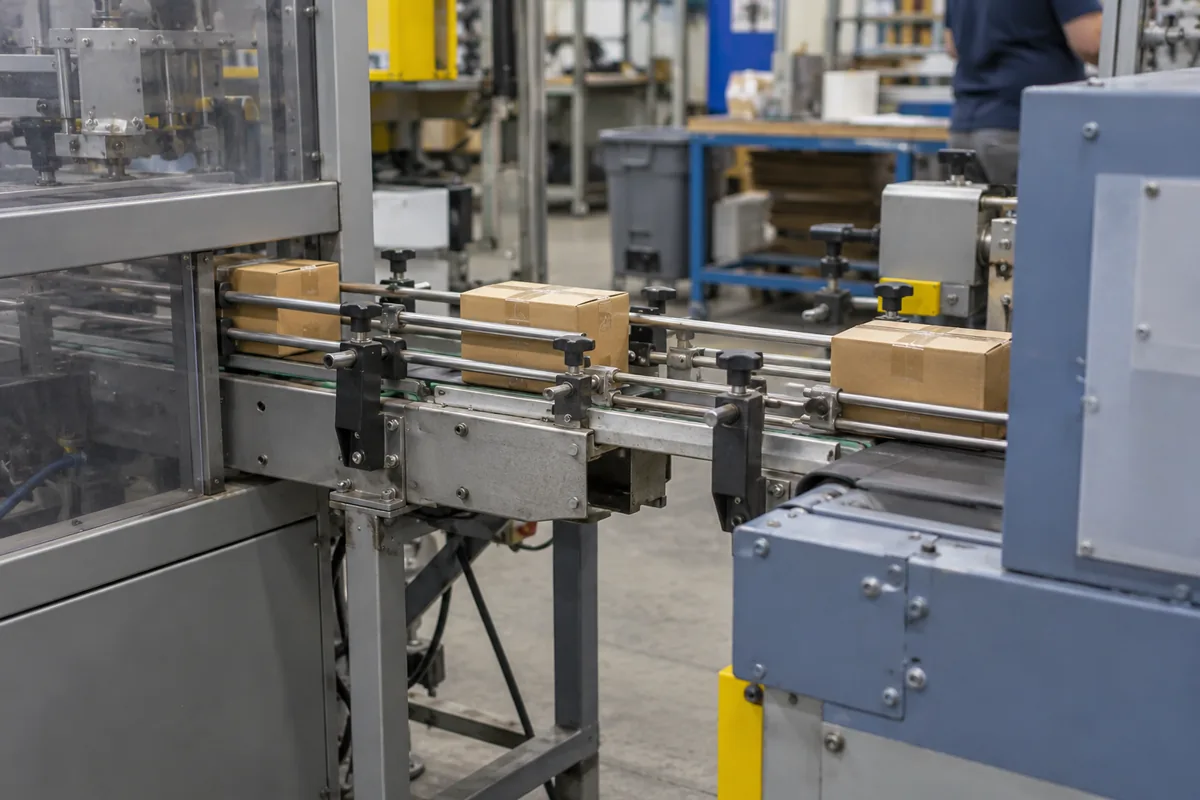
A handoff needs both equipment parties and an integration owner.
Common mistake: Each supplier answers only for its own discharge or infeed. The interface row must identify how the two answers meet and who owns the remaining gap.
The automation desk helps frame the required function before the responsible engineering parties select its implementation. For filling-specific boundaries, use the rotary interface questions.
Takeaway: A shared boundary needs an explicit joint answer and a named resolution owner.
What is included, excluded or unresolved?
Assign a status to every equipment, document and service item, including the tasks needed to connect new and retained equipment. This makes supplier responses comparable without creating a universal standard package. The scope table should show the requirement reference, offered answer and owner, so an exclusion cannot disappear into general proposal language.
| Scope item | Required answer | Evidence/reference to retain |
|---|---|---|
| Transfer with no named owner | Product backs up at the discharge, or the next machine waits empty, and each supplier answers only for its own frame | Name both equipment parties and one person who closes the joint answer. Record the leaving state and the entering state |
| Film described only as “suitable” | The roll that arrives misses the gauge, print, or diameter the machine was built around | Write material, gauge, print, and maximum roll diameter. EDL’s examples are LDPE, 2.0 mil, and 14 in or 20 in |
| Utility copied from the typical preference | The site cannot supply 460/480 VAC, 3-phase, 60 Hz, or 90 psi | Write what is available and what is not. Leave kilowatts empty |
| Current rate and a future rate on one row | Late products or throughput add delays and changeovers | Keep the future item on its own row. Leave the rate empty until it is printed |
| Factory sheet treated as the site connection | The builder’s plant often cannot hold production volume and product conditions; PMMI assigns actual factory conditions to the site test | Map each requirement to factory evidence or site evidence |
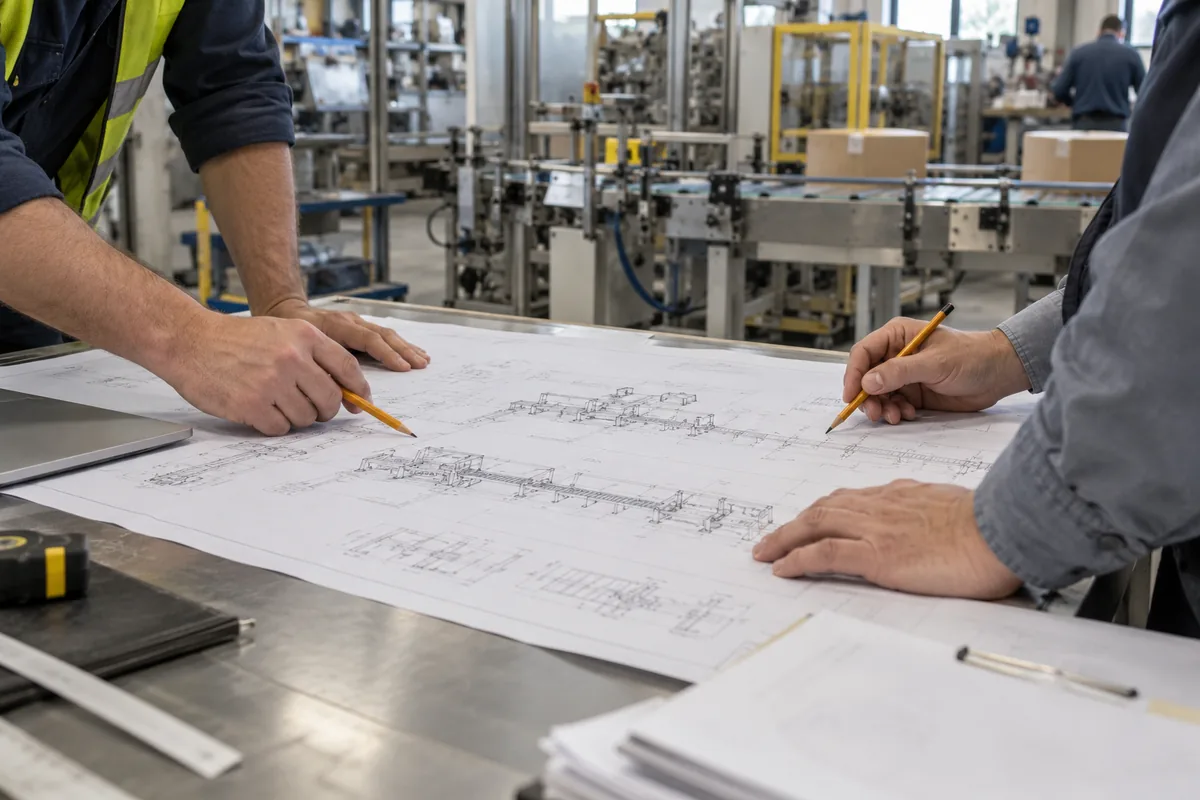
The photograph shows one physical transfer. It does not identify the owner.
A complete-line offer can include several machines while leaving site connections, existing-equipment integration or sample trials outside its scope. Record those differences before discussing price. The Durst–MPS transition review shows how to retain dated contract and service contacts when an equipment supplier announces a corporate change.
Machine A and Machine B are placeholders. Replace them with the machines named in the offer.
Scope status is separate from the item name. An unresolved item needs an owner and next action.
Takeaway: A shared boundary needs a joint answer and a named owner. A control standard’s catalog title does not fill in the states the catalog page omits.
What is included, excluded, or still open?
Mark every machine, document, and service included, excluded, or unresolved. An exclusion that lives only in a general proposal sentence drops out of the comparison.
| Scope item | Required answer | Evidence to keep |
|---|---|---|
| Machines and options | The configuration, and included, excluded, or unresolved | Revision of the configuration schedule |
| Transfers and discharge | Equipment plus the interface owner | Layout and the interface row |
| Format parts | Approved formats and the parts supplied for them | Format schedule |
| Inspection and coding | The task, and whether the device is in the offer | Requirement and the test that can show it |
| Controls and data | Functions, exceptions, and the points to be exchanged | Joint interface answer |
| Installation and utilities | Supplier tasks and buyer tasks | Site services against the offer |
| Documents and training | What is delivered, to whom, and at which stage | Handover list |
| Factory and site tests | Which requirements each stage can show | Open items and the stage that can close them |
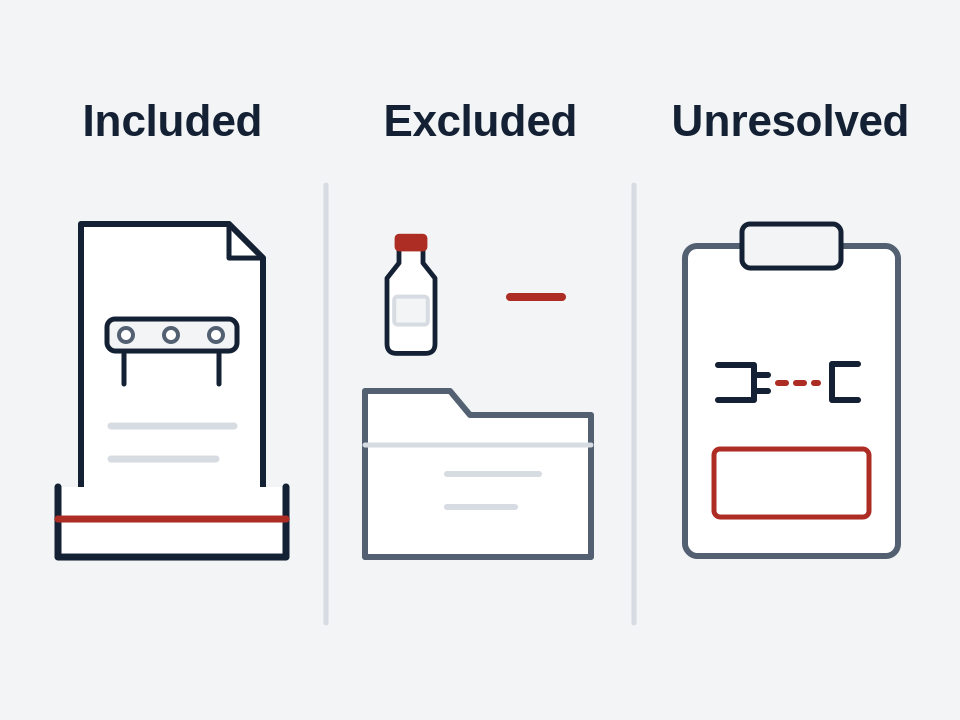
Scope status is separate from the equipment name. An unresolved row needs an owner and the next record that will close it.
Innova’s project sequence for a pallet line runs from requirements and supplier comparison through space and layout, then design, manufacturing, factory acceptance, installation and commissioning, training, and maintenance. Their guide structures cost tracking across acquisition and installation alongside operating costs made up of maintenance, energy, packaging materials, and labor. Populate each cost category from verified supplier quotes and plant utility schedules.
An incomplete specification shows up as time and material, not as a percentage saved:
- A format or rate that was not on the baseline becomes a changeover and a delay. EDL states that outcome and does not print the hours.
- A site that cannot meet the preferred 460/480 VAC service or 90 psi air needs a utility correction before the machines can run together. The kilowatt load is not printed.
- A data interface built as a one-off list, instead of the required and optional points in a machine profile, is programming time. Weihenstephan says a defined point list reduces that effort and does not print the hours or a percent. The homepage count is 440 points across all domains, not the count for this line.
- A factory demonstration that used a temporary downstream stand still leaves the real connection for the site. That return visit is the hidden schedule item.
How should output be stated?
Name the counted unit, the format, the machines inside the observation, and how stops and rejects are treated. A machine cycle, a pack, a case, and a pallet are different counts. Do not copy an unqualified machine rating into the line row.
PMMI says the contract should state the dry-cycle length, the number of packages, and the speed. In the test-plan section it recommends a dry cycle of 24 hours minimum. In a later section on taking enough time at the factory, it uses a six-hour window as the example of a test squeezed too short. The same article also refers to a shallow test showing up nine months later, and to simulation being difficult beyond a few minutes. It does not print a line speed.
Accepted output rate = accepted count / observation hours
The saved pages do not print an accepted count or a production observation window. Leave both empty until the project record prints them.
Worked example: The dry-cycle gap uses the 24-hour recommendation and the six-hour example from that article. No other number is introduced.
Recommended minimum dry cycle = 24 hours
Squeezed window cited on that page = 6 hours
Gap (hours) = 24 - 6 = 18
The 18 hours is the arithmetic difference between those two published durations. It is not a measured production loss, and it is not a line speed. The package count and the speed stay empty because that page does not print them.
Air margin (psi) = site air (psi) - 90
The 90 psi term is EDL’s preferred air service. The site air term is empty on every page saved for this guide, so the margin stays empty until a site record prints a pressure.
Takeaway: An output claim is comparable only when the counted unit, the connected machines, and the conditions are the same on every offer. A blank speed cell is the correct cell.
What can the factory show, and what waits for the site?
Assign each requirement to the stage that can actually show it.
PMMI separates the two stages. The factory test verifies the desired function of the machine and the document set: protocol, manuals, training material, work and maintenance procedures, spare-parts list, certificates, as-built drawings, data sheets, calibration records, and welding qualifications. The site test affirms that the machine runs the product to the specification in the operating environment. The article says simulating production volume and product conditions in the builder’s plant can be difficult or impossible, especially beyond a few minutes, and that actual factory conditions are the point of the site test. It also says a brief factory test shows up as a problem on the third shift, nine months later. Those are the article’s statements. They are not a result from this site.
Innova, writing about a pallet line on 21 March 2024, says factory tests before installation simulate real operating conditions, and that commissioning after installation is where final adjustments and last tests happen in the factory. Read the two accounts side by side and write, for this project, which conditions the factory will use and which conditions exist only on site. A signed factory sheet does not close a connection that was not there.
| Requirement | Factory question | Site question |
|---|---|---|
| Build and documents | Is the offered build and the document set present? | Does the installed scope match that baseline? |
| Product and materials | Are the production materials on the machine? PMMI says other materials weaken the test. | Which final conditions still have to be run? |
| Transfers | Which real connections can be run, and which are temporary? | Which kept equipment was absent at the factory? |
| Utilities and layout | What temporary supply is in use? | Do the site services match the written limits, including 90 psi only if the site record says so? |
| Open items | Which exceptions are written down? | Who closes them after training? |
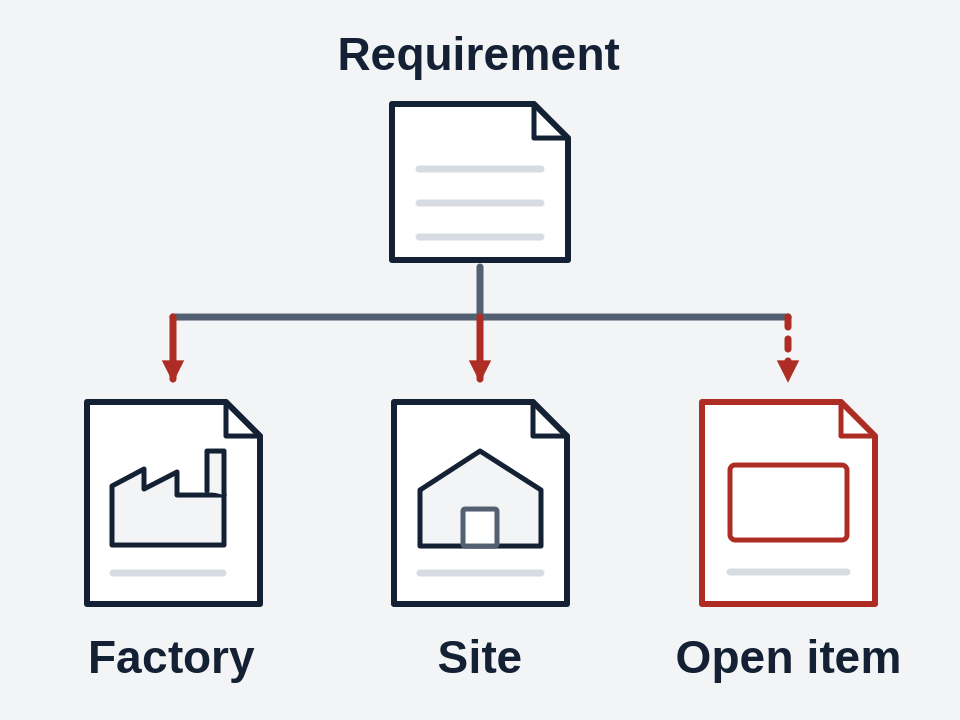
The packaging machinery FAT checklist is the next record for requirement, evidence, and deviation. Agree the project criteria there. This page does not copy a reject percentage or an acceptance limit, because the saved sources do not print one.
Common mistake: A factory run uses a temporary downstream stand, and the final connection is marked complete. Keep that connection on the site row.
When this does not apply
This is a procurement scope record. It is not a line design, an operating procedure, or a safety approval. PMMI’s factory checklist includes guarding, emergency stops, and lockout of electrical and air energy. Those checks belong in the supplier’s safety procedure and the site’s own practice. This page does not substitute for them.
Label materials, control wiring, and a universal machine sequence are out of scope. Future formats, substitute samples, and unconfirmed site utilities stay proposed until the project record prints them. Where a saved page is only a catalog entry, as with the ISA-TR88.00.02-2022 product page, the technical fields it does not print stay empty.
Method and sources
The matrices consolidate scope questions for packaging and filling buyers from industry engineering guides:
- EDL equipment specification checklist (April 14, 2015): retained for input categories.
- Innova pallet-line project guide (March 21, 2024): scope, preparation and project stages in a pallet-packaging context.
- Videojet packaging-line glossary: packaging and coding operations across primary and secondary stages.
- I&R Group buyer questions: complete-line and quote-comparison checklist items.
PMMI ProSource, 10 June 2021, was read from the Internet Archive capture of 12 December 2024 because the live article URL returned 403 on 18 October 2026. The 24-hour dry-cycle recommendation, the six-hour window, the factory-versus-site split, and the empty speed, temperature, and consistency fields come from that capture.
OMAC’s PackML page states the adoption as ISA TR88.00.02 and the aim of consistent machine data. The ISA page is a catalog title for ISA-TR88.00.02-2022. It is not the report. Weihenstephan’s homepage prints 440 data points for all domains and over 150 machine classes. It does not print a WS Pack subset. Innova’s guide of 21 March 2024 is a pallet-line project sequence, not a template for every packaging line.
The editorial policy separates a source statement from a recommendation on this site. Update the specification when the requirement, the configuration, or the source page changes.
Takeaway: Public checklists supply the rows. The project register supplies the values those pages left empty.