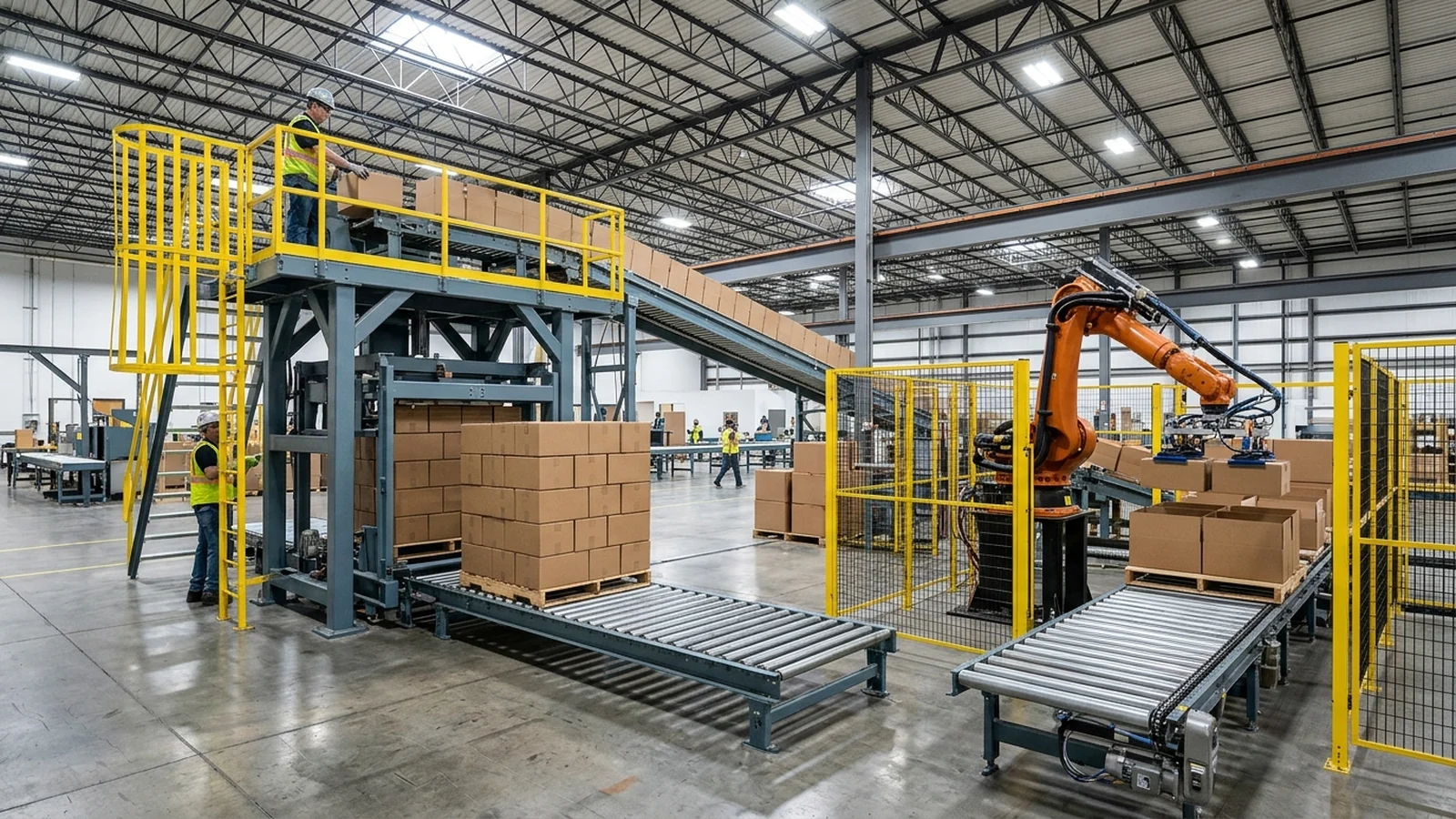
material handling
Palletizer Machine Buying Guide: Conventional vs Robotic vs Cobot
Select and verify an industrial palletizer machine across conventional layer pushers, robotic and cobot cells, end-of-arm tooling mass, and pallet dispensers.
RESEARCH DESK / 05
Material handling starts with the load and the movement that must be completed. This section covers the questions needed to distinguish pallet production equipment from palletizing and other line-end handling tasks. Those terms can describe different jobs, so they should not share a shortlist without a clear scope.
STEP 01
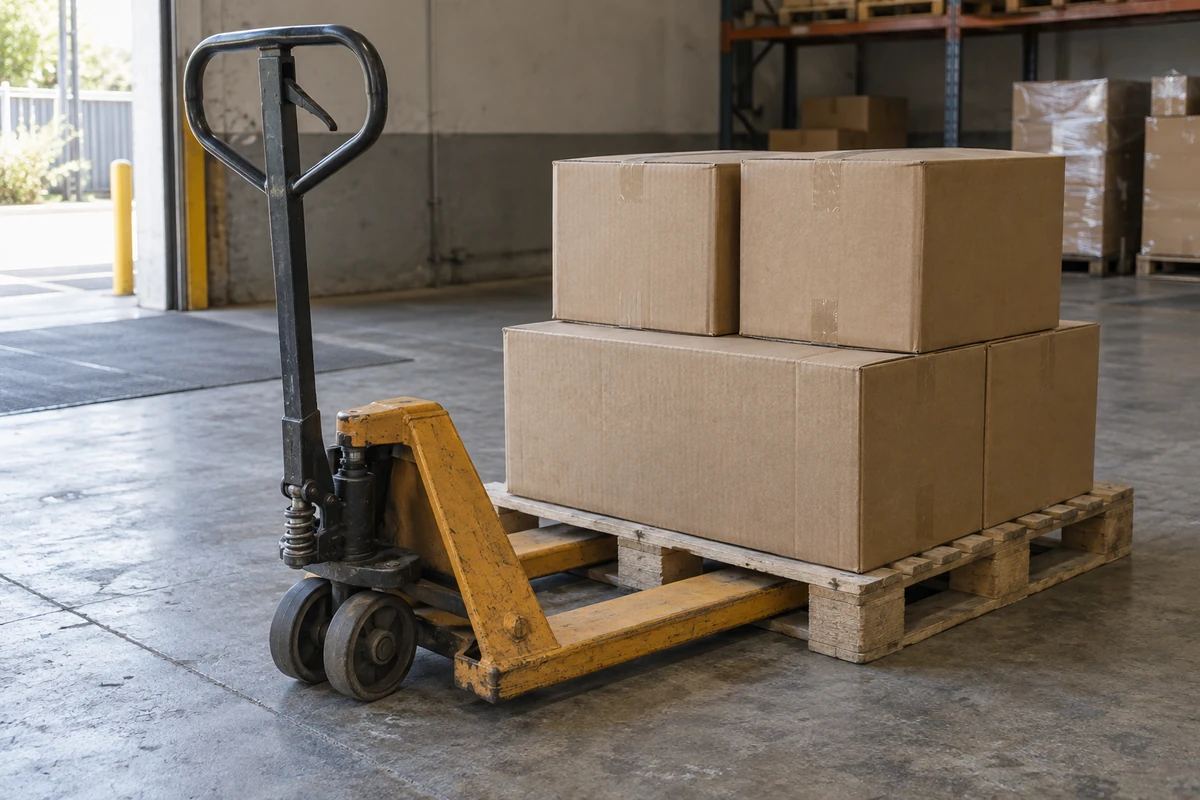
State whether you need to make a pallet, build a product load on one or move an existing load. Define the load dimensions, mass and condition from your own records. The phrase pallet machine is too broad to settle those choices.
STEP 02
Draw where the load enters, where it leaves and the space available around that movement. Record the connection to conveyors, storage or dispatch. Ask a supplier how the actual load will be held and transferred in the proposed arrangement.
STEP 03
Review the proposed equipment together with its end tooling, controls and interfaces. Installation and application safety require the relevant manufacturer documentation and site assessment. A component claim does not verify the performance or suitability of a complete system.
FANUC CRX-30iA Palletizer: Match Payload Mode to Reach — Separate the 30 kg / 1,756 mm pairing from the 25 kg / 1,889 mm mode, and check J6 moment before treating a pallet corner as inside the catalog envelope.
Palletizer Machine Buying Guide: Conventional Layer vs Robotic & Cobot Cells — Compare high- and low-level layer palletizers, articulated robots, and cobot cells across end-of-arm tooling weight deductions, multi-line cycle rates, and dispenser scope.
material handling
Select and verify an industrial palletizer machine across conventional layer pushers, robotic and cobot cells, end-of-arm tooling mass, and pallet dispensers.
material handling
FANUC pairs the CRX-30iA palletizer at 30 kg with 1,756 mm, and 1,889 mm only in the 25 kg mode. Check wrist load and J6 moment before the far case.